
Data reveals long decline in pheasants, hunting industry
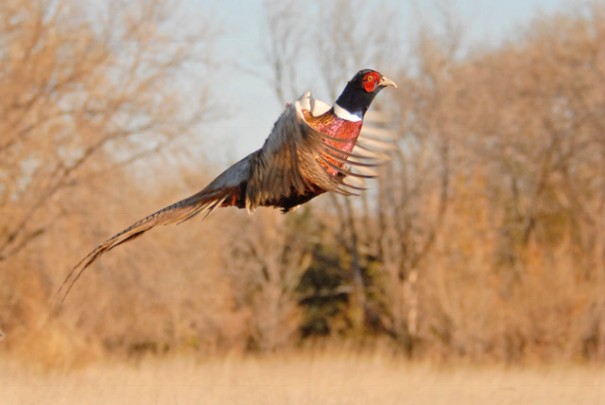
Submitted photo
Pheasant hunting in South Dakota is big business, but licensing revenue has fall significantly over the past decade.
Pheasant hunting remains big business in South Dakota, but both the number of birds available to hunt and the hunters who buy licenses to shoot them have both fallen significantly over the past decade.
In terms of license revenues, direct spending and spinoff spending, and the annual fall season makes up a significant portion of the state’s overall $1.3 billion outdoors industry.
In a state report using data from 2016, pheasant hunting accounted for $287 million in direct spending in the state that year, 60 percent of that, or $175 million, from non-resident hunters.
Over the past three decades, the year 2007 stands out as a peak year for estimated pheasant population, number of licensed hunters and birds harvested, according to GFP data. That year, the estimated pheasant population was 11.9 million. About 2.1 million birds were harvested and more than 180,000 licenses were sold (roughly 103,000 non-resident and 78,000 resident licenses.)
But over the past decade, state data have shown a steady decline in bird populations and licensed hunters, and the state’s reputation as the pheasant-hunting capital of America has taken a hit.
In 2010, the state licensed 173,000 hunters who took 1.65 million pheasants from an estimated statewide population of 9.8 million birds.
In 2019, about 111,000 licensed hunters harvested 829,500 birds.
In 2018, the state ended its annual roadside pheasant count that resulted in population estimates; that year, the count showed a population of 7.1 million birds.
The largest and most worrisome decline has been in the number of non-resident hunters, who purchased 38 percent fewer licenses in 2019 compared with 2010 in a trend state officials are eager to reverse.
South Dakota has seen its pheasant population fall steadily in recent years, suffering lower brood counts resulting mainly from poor weather and reduced habitat for the birds.
A main provider of wildlife habitat in the state is the federal Conservation Reserve Program, which pays an annual fee to landowners, mostly farmers, who agree to halt production or development of part of their land to protect soil and water and create wildlife habitat.
South Dakota had nearly 1.8 million acres protected under CRP in 1994. Twenty years later, in 2014, CRP acreage in the state had fallen to 930,000; it has since rebounded to about 1.1 million acres in 2019.
State wildlife and tourism officials for years have promoted the state’s pheasant-hunting industry to hunters, particularly non-residents who want easy success when hunting the birds that can be elusive in other states.
South Dakota Game, Fish & Parks Secretary Kevin Robling said the state puts a high priority on managing and growing the pheasant population and added that continued strength of the hunting industry is critical to supporting those efforts.
“Hunting is the greatest form of conservation in a sense … because every licensed dollar goes back into the management of game species and all species, actually,” Robling said in a recent interview with News Watch. “The user-pay, user-benefit system makes hunting the number one form of wildlife management.”
State officials remain bullish on the industry, using the “2021 Ringneck Outlook,” subtitled “Hunt the greatest in South Dakota,” to promote the 2020 season as “spectacular” and “incredible” and assuring hunters the 2021 season from Oct. 16 to Jan. 31 will be even better.
South Dakota did see a slight jump in hunters and birds taken during the pandemic-influenced 2020 hunting season, when indoor activities were curtailed.
The state has taken recent steps to try to boost the pheasant population and lure more hunters in to the field.
Last year, the state increased the length of its pheasant hunting season from 79 days to 107 days, and is maintaining the longer season again this year and promoting the extra days as a bonus for prospective hunters.
State officials say the controversial Nest Predator Bounty Program, in which adults and children are paid to trap and kill animals that prey on pheasant and duck nests, is one way to boost bird populations. The program has paid out about $1.2 million in bounties to trappers who have killed about 134,000 raccoons, skunks, opossums, red foxes and badgers since the program began in 2019.
Even though the state has no scientific data to support the claim, it promotes the predator-bounty program on the “ringneck outlook” webpage by claiming that “local duck and pheasant nest success has been positively influenced.”
Licensed pheasant hunters in SD
Year Non-resident Resident Total
2007 103,048 77,788 180,836
2011 95,077 69,120 164,197
2019 63,801 47,403 111,204
2020* 62,289 59,042 121,331
Pheasant population and harvest
Year Estimated pheasants Pheasants harvested
2007 11.9 million 2.1 million
2011 6.6 million 1.6 million
2019 ———— 829,000
2020 ———— 1.1 million
Source: South Dakota GFP
Notes: 2007 was recent peak year for license sales and bird counts; state ended pheasant population estimates in 2018; 2020 was COVID-19 pandemic year with 28 extra hunting days

